Featured Post

Ellen, please be kind to the planet, not just to your fellow humans, gorillas in Rwanda

LUNCHTIME IN RWANDA: Ellen DeGeneres, right, and wife Portia de Rossi with a mountain gorilla. The Ellen DeGeneres Wildlife Fund  is supp...

Monday, August 10, 2020

Monotony of 150 days in quarantine leaves me bored to tears, fearing long food lines

EXCUSE TO LEAVE THE HOUSE: To break the monotony of staying home during the Covid-19 pandemic, I pack up all of the plastic bags and food wrapping we accumulate and take them for recycling at the ShopRite in Paramus, a few miles from my home.

Plastic in our food and water
 adds to worry over coronavirus


By VICTOR E. SASSON
EDITOR

HACKENSACK, N.J. -- As an older American, I know the quarantine is blurring time when I have to check my pill organizer to know what day it is.

The Covid-19 death toll continues to climb, but all my family and I can do is try to eat healthy, stay safe and limit our trips outside our home.

Still, with our quarantine nearing 150 days, the monotony, broken mostly by food shopping, is getting to us.

Our days and nights at home have a sameness to them -- punctuated only by horrifying news of the devastation and death caused by the coronavirus.

The United States has passed 5 million confirmed cases of the virus, more than any other country, The New York Times reported.

Food shopping

I've developed an unnatural fear of lines.

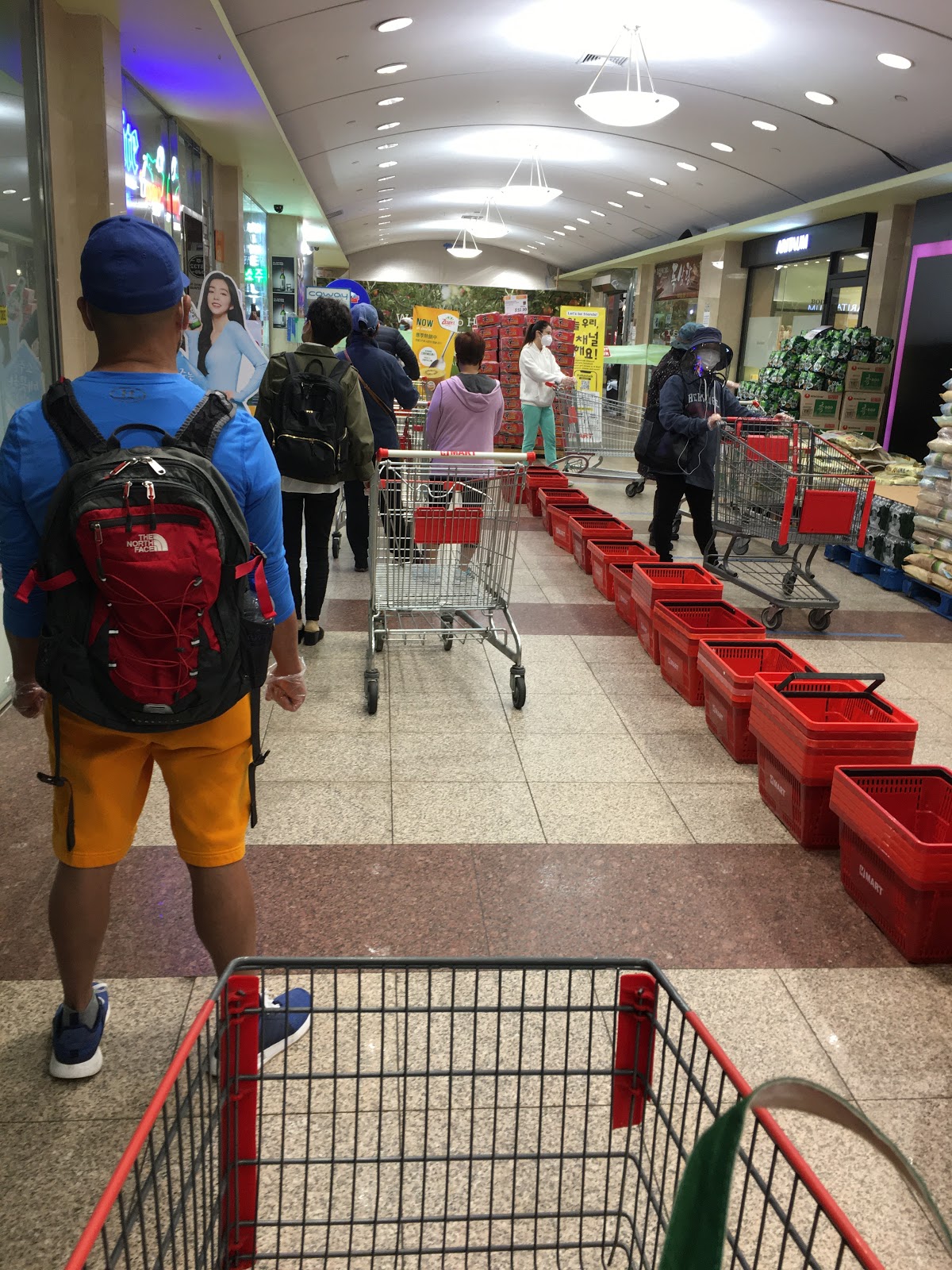
Lines that double, triple and quadruple, such as those I saw in mid-April at Costco Wholesale in Teterboro.

Or, even the long, single line of masked shoppers I once stood on at the H Mart in Ridgefield, a Korean supermarket offering a large selection of fresh, wild-caught fish for our Sunday dinner.

Now, I go to the smaller H Mart in Paramus, where there is never a line to get in on weekends, but lately a short line to check out with my fresh fish and prepared dishes like stewed tofu or pollock with sweet and hot peppers.

I've encountered other long lines, especially for returns, at Lowe's and Kohl's, both in Paramus.

Weight gain and loss

In the 5th month of the quarantine, food shopping -- my only form of exercise -- has become a chore instead of something I delight in.

Still, I am trying to buy more and more organic and non-GMO food that is free of pesticides for my family of 4, not only at Whole Foods Market, ShopRite and H Mart, but at Costco Wholesale, where an increasingly large variety of organic products and produce are available.

In the first few months of the quarantine, I gained 6 pounds, but I've been able to lose them and a couple of more by eating only breakfast and an early dinner, and watching my carbs. 


MAY 24, 2020: The line to get into the H Mart in Ridgefield, above, brought wartime rationing to mind. The line continued inside the store, below. 
PROTECTION: The H Marts in Ridgefield and Paramus consistently provide disposable plastic gloves to customers.
APRIL 23, 2020: Customers of Whole Foods in Paramus lining up to enter the supermarket after the hour reserved for shoppers who are 60 years old or older.

Shame on news media

Having spent nearly 40 years as a reporter, copy editor or food writer for 3 daily newspapers, including The Record of Hackensack, I've been so ashamed of the news media's surrender to President Trump.

In only the last month or so, it seems, reporters who cover the White House have started pushing back against Trump's endless stream of lies about the pandemic, the Obama administration, the environment, and Joe Biden, the Democrat who is running for president.

Meanwhile, Biden put his foot in his mouth a couple of times last week, including when he referred to CBS correspondent Errol Barnett, who is black, as "man." 

He also compared the reporter's  question about the candidate taking a cognitive test to asking Barnett if he "used cocaine." 

"Are you a junkie?" Biden said.

So, it's best to focus not on the candidate, but on what he stands for, and I'll take Biden's progressive platform over Trump's destruction of our democracy -- fueled by racism and greed.


A cartoon about President Trump by Steve Sack of the Star Tribune in Minnesota was among the most popular of the week (Aug. 1-8) on Cagle.com.

Plastic and food

After reading the June cover story in Consumer Reports magazine -- "How To Eat Less Plastic" -- I've replaced all of our plastic food-storage containers with glass, and stopped using a cheap coffee maker made mostly of plastic.

Now, I brew coffee in a Farberware Superfast Fully Automatic Percolator that my mother used about 30 years ago in our old Brooklyn home.

If Covid-19 doesn't get you, microplastic in our food and water likely will.

To make matters worse, the vast majority of plastic with a recycling symbol never gets recycled -- it ends up in garbage dumps, leaching into our reservoirs, or pollutes the ocean, where it is consumed by fish and other seafood.

The widespread notion most plastic is recycled is false, part of an elaborate, multi-million dollar ad campaign by the same petrochemical industry that pollutes our air and profits from the widespread use of plastic to bottle water and wrap food.


TWO MENUS: I'm a pescatarian, but the 3 other members of my family are dedicated meat and poultry eaters, so our food bills are unusually high. And we always have leftovers, such as this Atlantic Halibut Filet from Costco Wholesale I poached in Roasted Chipotle Salsa, and had for breakfast over leftover organic quinoa.
HEALTHY TAKEOUT: Wild Salmon BBQ Turmeric style was one of the 5 meals I ordered from Planted Eats, a health-food cafe in Hackensack.


Daily routine

I'm usually up before 6 a.m. to brew a pot of coffee, then shower (and shave every two days) before putting on my summer outfit -- shorts and a T-shirt, plus flip-flops around the house or a pair of Vans, red to match my Tesla Model S.

Breakfast is leftovers or I'll make a stuffed egg-white omelet with grated Parmesan cheese, smoked wild salmon, Mexican-style salsa and organic arugula or baby spinach, cut into 3 pieces so my wife and mother-in-law can have some, too.

If I don't have food shopping to do, I go online to print out credit cards statements or buy something at AmazonSmile.com or another site (nearly every day, it has turned out), and monthly spending on my Amazon Prime credit card has doubled during the quarantine.

I'll putter around the house or snip fresh herbs from the garden, read leftover sections from The Sunday Times under an awning on our deck, then go upstairs for a nap in the early afternoon, with my phone in my pocket to count steps.

I can easily do a mile or more around the house.

In the early months of the quarantine, I tried to walk in my Fairmount neighborhood every day, but that ended when I tripped over an uneven sidewalk and cracked or broke a rib. 

Early dinner

One of us cooks dinner and when my wife does, I usually have leftover fish or prepare a large dinner salad with raisins, slivered almonds, pitted Greek olives and fresh fruit.

We've been eating dinner as early as 3:30 in the afternoon, then settling down in front of the TV, having tea, roasted almonds, fresh organic fruit and no-fat yogurt until 8:30 p.m., when my wife goes upstairs to sleep.

I usually try to stay up until after 10 p.m., but TV, Netflix and Amazon have become so boring I barely make it.

I did double our Netflix DVD plan to 2 discs out at one time, and movies like "1917" and "Bombshell" have helped.

During the night, I get up 3 times to go to the bathroom, and start all over again before 6 a.m.


What's ahead?

In June, we started picking up takeout food from restaurants, including Lotus Cafe and Art of Spice, both in Hackensack.

And we spent a delightful evening enjoying dinner with wine and a pair of cabaret singers on the patio outside the Papermill Playhouse in Millburn.

Also in June, we drove into Manhattan to visit public statues and sculptures.

But only a Covid-19 vaccine will start us back on the road to normalcy, and allow me to volunteer again at a major hospital twice a week, as well as return to the gym, both for more exercise and the social contact.

I can't wait, even though I've always felt the definition of a "volunteer" is an older American who has nothing better to do with his or her time.

Wednesday, July 22, 2020

Japanese conglomerate owns equity fund that controls The Record, (201) magazine

THE VISION: A 271-unit apartment building -- to be called Print House -- is under construction in Hackensack, where The Record and North Jersey Media Group operated until 2009 (rendering from JLL Capital Markets).
THE REALITY: Construction on the first building, above and below, is expected to be finished in late summer to early fall 2021. A total of 5 buildings with a total of 654 units are planned for 20 acres between River Street and the Hackensack River. 


 Hedge funds, private equity
have become force in news industry


By VICTOR E. SASSON
EDITOR

HACKENSACK, N.J. -- In 2016, a New Jersey hedge fund assumed ownership of Canada's largest newspaper chain "with very little fanfare," The New York Times reported last week.

The story noted "hedge funds and private equity companies have become a force in the news industry," including at The Record of Woodland Park and hundreds of other newspapers owned by Gannett.

"The private equity fund Fortress Investment Group controls the largest American newspaper chain, Gannett, which publishes USA Today, The Arizona Republic and 250 0ther dailies," The Times reported.

"Fortress is owned by the Japanese conglomerate SoftBank," the newspaper said.

A SoftBank subsidiary is called SB Media Holdings.

Borgs sell out

The Borg family sold North Jersey Media Group, including The Record, (201) magazine and other daily and weekly newspapers, to Gannett for nearly $40 million in cash in July 2016, but retained ownership of roughly 20 acres along River Street.

Now, with a nearly $49 million construction loan, the Borgs' Fourth Edition Inc. and partners have started work on the first of 5 apartment buildings.

Another apartment building in New Rochelle, N.Y., is called The Printhouse. 

"Print house" is usually a reference to a textile-printing factory. But a "printing house" is a reference to a company that produces "printed matter" -- closer to what The Record did in Hackensack for 110 years.

Cuts, cuts, cuts

Meanwhile, Chatham Asset Management of Chatham, N.J., emerged as the winning bidder last week in a bankruptcy auction for the McClatchy Co., "a chain with 30 media outlets including The Miami Herald, The Kansas City Star and The Sacramento Bee," Edmund Lee of The Times reported.

"With roots going back to 1957, McClatchy, a consistent winner of top journalism awards, was one of the last major family run publishers" -- similar to the Borgs' standing in New Jersey.

What The Times reported about Chatham's track record as owner of a major newspaper chain is also true about Gannett, which accelerated a process started by Stephen A. Borg when he was publisher of The Record.

Postmedia, the Canadian newspaper chain, cut its workforce, reduced salaries and benefits, and "centralized editorial operations in a way that has made parts of its 106 newspapers into clones of one another," The Times said.


Thursday, July 9, 2020

Covid-19: A showroom without Toyotas, need a mask to go home, outdoor dining

A CAR-LESS SHOWROOM: After I dropped off our 2010 Toyota Prius for service this morning, I walked through an empty showroom at Hackensack Toyota on River Street normally filled with the latest models. This dealer also has suspended a free shuttle service during the pandemic.

A short walk in Hackensack
shows changes from pandemic


THE CURRENT ON RIVER: A luxury apartment building across the street from the Toyota dealer is being marketed as The Current. Rents range from $1,950 for a studio to $3,500 for a 2-bedroom apartment.
MASKED TENANTS: This sign near the front door of The Current apparently means you need to wear a mask when you return home. The apartments were built on the former site of the Oritani Field Club and its tennis courts, and retain the club's 18 E. Camden St. address.
TWO-WAY WORK: Main Street in front of the Johnson Public Library was blocked for major infrastructure work as the city prepares to convert more of the street to 2-way traffic.
PHO ON MAIN: Pho Saigon, a Vietnamese restaurant that occupies the space long occupied by Wondee's, is open for takeout and delivery.
WE STAND TOGETHER: The Main Street Business Alliance -- the force behind redevelopment of downtown Hackensack -- has posted signs rejecting racism. This one is in the window of Pho Saigon.
DELIVERY AND TAKEOUT: I glanced inside Pho Saigon before the restaurant opened for business, and saw the table where delivery and takeout orders are placed for pickup.
SHUTTERED BUSINESSES: The Riviera Lounge, above, where one customer praised the "beautiful ladies," and AMA Family Martial Arts Center, below, are just two of the shuttered business along Main Street.
PANDEMIC TO BLAME: Both businesses likely succumbed to restrictions put into place during the Covid-19 pandemic.
NEW BUSINESS: Halal Boyz is one of the new businesses on Main Street. The fare includes falafel and fried fish, available for takeout or delivery.
EATING OUT, LITERALLY: Outdoor dining is available at Noches de Colombia on Main Street.
REDEVELOPMENT: Work has resumed on two of the apartment buildings along Main Street, above and below.
NAIL GUN OR REAL GUN? The construction worker at the top of the boom was using a nail gun, which can be mistaken for the sound of a real gun.
GOING OUT OF BUSINESS: Sears, a Main Street landmark for many decades, is "likely closing," NorthJersey.com reported on July 1. The store opened in 1932. (See more in the comments section below.)

-- VICTOR E. SASSON

Sunday, June 28, 2020

Cartoonists slam Trump's many failures on Covid-19, take a look at Nov. 3 election

This cartoon from Tom Janssen at Cagle.com shows President Trump's reelection chances plummeting as the number of Covid-19 cases continue to rise. 
This Guy Parsons cartoon portrays Trump as the Rodney Dangerfield of American politics, facing many empty seats in rabidly racist Tulsa, Okla., when he resumed holding campaign rallies.
"And then, like a miracle, it goes away!" Trump is quoted as saying of the coronavirus in this sendup by Steve Sack, the Pulitzer Prize-winning cartoonist at the Star Tribune in Minneapolis Minn.
Two amazing "medical facts" explored in this cartoon by Monte Wolverton are 1) people who take a Covid-19 test are hypochondriacs and 2) social distancing and face masks cause herpes.
Tombstone makers are catering to victims of Covid-19 who refused to wear face mask, says cartoonist David Fitzsimmons of the Arizona Daily Star and Tuscon.com. "He fought to breathe free or die," one tombstone says (upper left).
U.S. Attorney General William Barr has shown a propensity to punish those investigating Trump, so cartoonist Steve Sack portrays the "Barr Code" as reading "Corrupt."
Freelance cartoonist Bob Englehart of PoliticalCartoons.com suggests statues of front-line pandemic heroes replace those that are being torn down because they represent racism.
Flying without a parachute is the wickedly satiric result of  passengers refusing to wear face masks on a commercial airliner, cartoonist Dave Granlund says.
You've heard of Dr. Hannibal Lecter, the fictional forensic psychiatrist turned serial killer. So, cartoonist Kevin Siers of PoliticalCartoons.com slams justice ill-served by portraying Attorney General William Barr as Hannibarr Lecter, who says, "Justice is served with some fava beans and a nice chianti."
Award-winning cartoonist Jimmy Margulies lampoons Trump's touting of miracle cures for Covid-19, focusing on Roundup, the week killer linked to cancer and multimillion dollar settlements in numerous lawsuits. Margulies was the political cartoonist at The Record of Woodland Park for many years.
Trump is the embodiment of the coronavirus in this cartoon from J.D. Crowe. "The tests are making me look bad," he says while wearing a hat with the message, "America first in Covid Deaths."
In this cartoon by Rick McKee, the Grim Reaper tells a man complaining it's too hot to wear a mask: "It's not the heat, it's the stupidity." 
As the July Fourth weekend approaches, cartoonist Dave Granlund believes Americans could use a refresher course on the Declaration of Independence.
Croatian cartoonist Petar Pismestrovic shows Trump as a gunfighter dealing with two enemies -- the coronavirus and the election.
Steve Nease at PoliticalCartoons.com portrays Trump fanning the flames of racism by finding another way to blame the Covid-19 pandemic on China.


-- VICTOR E. SASSON

Monday, June 22, 2020

The more we learn about plastic and food the more we realize the health risk we face

SHOCKING: Consumer Reports magazine warns readers, "You may be consuming as much as a credit card's worth of plastic a week."

Factories destroy environment,
we ingest harmful chemicals


By VICTOR E. SASSON
EDITOR

HACKENSACK, N.J. -- For more than a decade, we've been trying to limit our intake of the harmful antibiotics used to raise meat and poultry on America's factory farms.

And in recent years, we've been buying and eating far more pesticide-free organics -- thanks to lower prices at Whole Foods Market, and a growing selection of organic and non-GMO food and beverages at Costco Wholesale and ShopRite supermarkets.

But we were ignorant of the dangers posed by all of the plastic packages and wrapping much of that food comes in.

And we didn't know about the recycling scam perpetrated by the petrochemical companies that are building more plants -- usually near minority neighborhoods -- to poison the air, and churn out even more harmful plastic packaging.

How we end up eating plastic

In a special report, the June 2020 issue of Consumer Reports magazine tells readers how to limit their risk of consuming "as much as a credit card's worth of plastic a week."

"Scientists say we each may be ingesting" plastic "through contaminated food and water, to the likely detriment of our health."

Nearly a century ago, plastic was advertised as "The Material of a Thousand Uses," Consumer Reports says.

Today, plastic is found in "the plates we eat from, the straws we drink through, the furniture we sit on," toys, clothes, cars and even in life-saving medical equipment.

"And -- more than anywhere else -- plastic is in our packaging, encasing ... the food we eat and the beverages we drink," CR says.

"Cracking open a brand new plastic bottle or tearing a wrapper off a sandwich releases fragments of plastic that we might end up ingesting.

"Reliable research now shows that tiny bits of plastic -- called microplastics -- are in our food, drinking water, the air we breathe, and, yes, inside our bodies," the magazine reports.


These symbols on plastic -- called "chasing arrows" -- are familiar to anyone who tries to recycle. But the vast majority of plastic bottles and other containers end up in landfills or oceans. This chart is from the Yampa Valley Sustainability Council in Steamboat Springs, Colo.


Most plastic isn't recyclable

CR says that in the United States, 76 percent of plastic garbage goes into landfills, about 16 percent more more is burned -- fouling the air -- and 1 percent of that total goes into the oceans, breaks down and ends up in seafood.

CR's figure -- 76 percent -- apparently is taken from NOVA, the TV science documentary:

In a July 2017 report, NOVA said that 6.3 billion metric tons of plastic -- of the 8.3 billion metric tons created between 1950 and 2015 -- are out of use and "most of it is in landfill and nature."

"The very idea that recycling makes plastic use acceptable comes from plastic manufacturers," says Judith Enck, a former Environmental Protection Agency regional administrator who is quoted by Consumer Reports.

"The reason the public thinks recycling is the answer is that the plastic industry has spent 30 years on multimillion-dollar [advertising] campaigns [falsely] saying that," she says.


"That was absolutely the wrong message. The message should have been: Don't use so much plastic," Enck says.


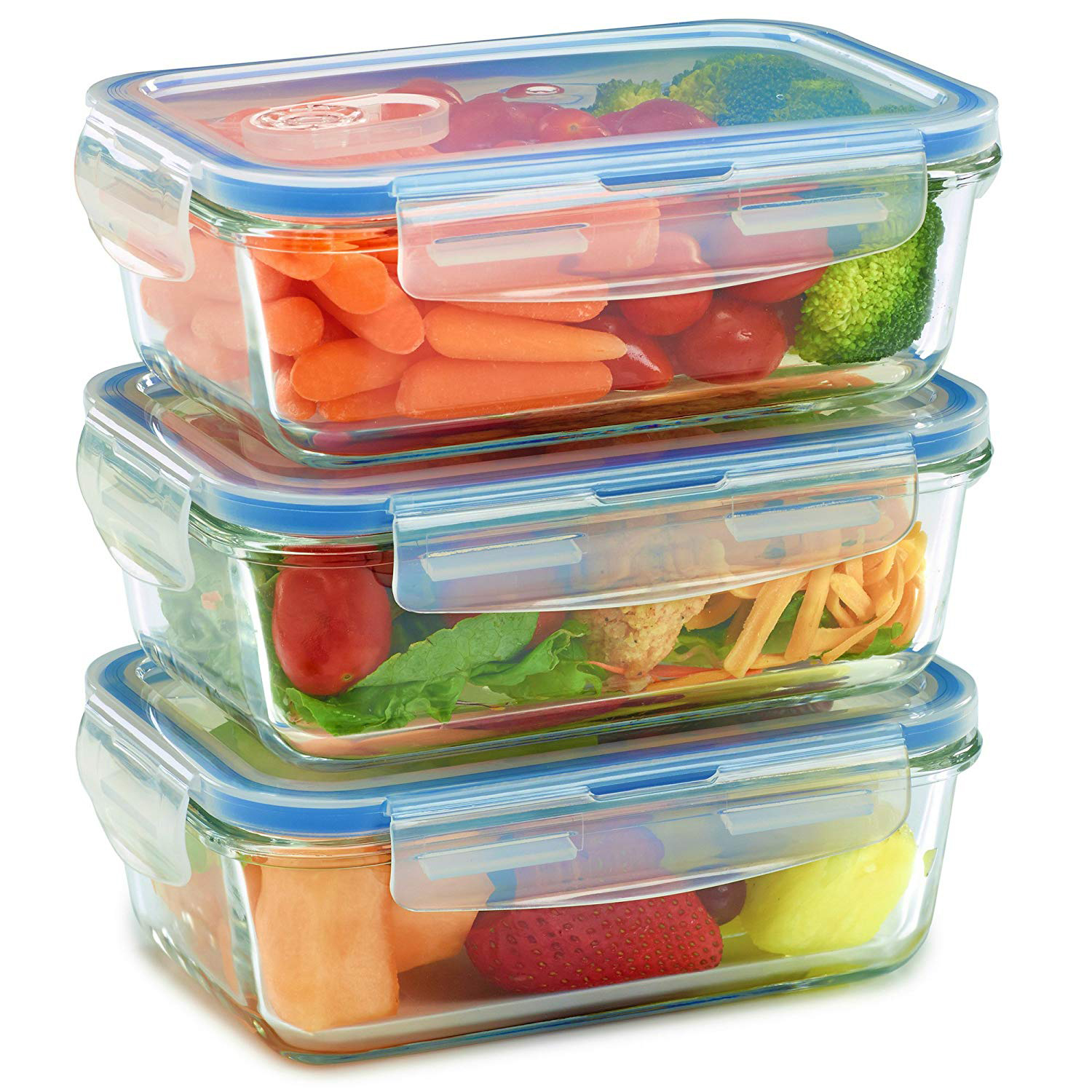
Glass containers are recommended over plastic for storing and reheating food. (Photo is from RealSimple.com).


How to use less plastic

Consumer Reports lists 6 ways to cut back on using plastic:

  • Drink tap water. Don't rely on bottled water.
  • Don't microwave food in plastic containers or covered by plastic wrap. 
  • Buy and store food in glass, silicone or foil, not in plastic that may contain harmful chemicals.
  • Eat fresh food as much as possible. Don't rely on processed food wrapped in plastic.
  • Vacuum regularly to avoid inhaling dust in your house that could be loaded with microplastics and chemicals that are found in plastic.
  • Join forces with community level recycling groups or so-called zero-waste groups.


Tuesday, June 16, 2020

Tesla urges you to arbitrate any disputes, but then sabotages out-of-court process

The 2016 Model S 75D I bought from Tesla last November had dents, scratches and crude, mismatched touch-up paint on the lower bumper -- damage that wasn't shown in photos of the car sent to me by the electric-car maker. See photos below.
When I picked up the car at the Paramus, N.J., dealership, a delivery adviser said Tesla no longer repairs this kind of damage, which might have occurred when the car was transported by truck from storage in Newburgh, N.Y.

EV maker refuses to pay $500 fee,
ends my bid to get bumper repaired

Editor's note: A few weeks after I posted this, Tesla paid the arbitration fee and after more back and forth with a lawyer, the EV maker agreed to replace -- not just repair -- my front bumper for a payment of $500. 

By VICTOR E. SASSON
EDITOR

HACKENSACK, N.J. -- Tesla owners agree no other electric-car maker can match the stunning technology packed into their vehicles.

But most of us also agree few companies have such poor customer service.

The latest example is Tesla refusing to pay the $500 filing fee required when a customer submits a dispute to arbitration -- short-circuiting the out-of-court process.

I got the bad news last week in an email from the American Arbitration Association.

I had filed a request that Tesla repair damage to a used Model S I bought from the company website last November, and paid a $200 filing fee.

A Tesla-authorized body shop gave me an estimate of $5,000 for replacing the damaged front bumper, although I'd be happy with just repairs and repainting.

Now, my only recourse is to file a small claims case in the Civil Division of Superior Court, where the maximum recovery is $3,000.

Agreement to arbitrate

I got the idea to submit my dispute to arbitration from the Motor Vehicle Purchase Agreement I received with my 2016 Model S 75D.

On Page 2, under "Agreement to Arbitrate," the company states, "Please carefully read this provision, which applies to any dispute between you and Tesla Inc. and its affiliates."

"If not resolved within 60 days, you agree that any dispute...will not be decided by a judge or jury, but instead by a single arbitrator in an arbitration administered by the American Arbitration Association under its Consumer Arbitration Rules."

Victor Sasson v. Tesla Motors

On June 9, 2020, I got an email from the association, notifying me Tesla has not paid the $500 filing fee required of a business to cover the "costs of arbitration."

I was asked if I was willing to "advance the unpaid fees" so the case could proceed, but they turned out to total $4,400 -- a $500 filing fee, a $1,400 case-management fee and a $2,500 arbitrator's fee.

Fuggedaboutit!

In subsequent emails, I was told the $200 filing fee I paid wasn't refundable.

And "Pro Se Administrator No. 5" declined to say whether Tesla has shown a pattern of refusing to take part in arbitration by not paying the fee required of a business.

"That is private information," I was told.


NEW BUMPER: On Oct. 30, 2020, I picked up my Model S with a new bumper, painted to match my multi-coat red paint job.