Featured Post

Ellen, please be kind to the planet, not just to your fellow humans, gorillas in Rwanda

LUNCHTIME IN RWANDA: Ellen DeGeneres, right, and wife Portia de Rossi with a mountain gorilla. The Ellen DeGeneres Wildlife Fund  is supp...

Showing posts with label Chevrolet Bolt EV. Show all posts

Thursday, March 8, 2018

Years late, Consumer Reports puts an EV on Top 10 list, but killer gas cars still rule

Consumer Reports' annual Auto Issue for 2018 shows one gas-electric hybrid on the cover. And the Chevrolet Bolt is the first all-electric car to make the magazine's 10 Top Picks (Page 19).

-- HACKENSACK, N.J.

By VICTOR E. SASSON
EDITOR

An all-electric, zero-emissions car has one major, life-saving advantage over every car that uses gasoline or diesel fuel -- no killer fumes.

A 2013 MIT study estimated 200,000 Americans die prematurely every year from so-called combustion emissions (industry, power generation, cars, trucks, trains and ships), and 58,000 of those deaths are caused by tailpipe emissions.

Yet, Consumer Reports stubbornly downplays the benefits of all-electric cars and gas-electric hybrids, and only this year named an EV to its Top 10 list in the magazine's annual Auto Issue.

Every other vehicle on the coveted list uses a gasoline engine; the editors couldn't find room for a single gas-electric hybrid, even though they are available in sedans, SUVs and crossovers.


Is CR truly independent?

This despite Consumer Reports' claim of independence: 

Unlike virtually all other publications and websites, Consumer Reports doesn't borrow the vehicles it road tests from the automakers' press fleets.

Each year, "we spend $2.2 million to buy" about 50 cars, SUVs and trucks, the magazine says.

And it doesn't accept any form of advertising from carmakers, automobile dealers and oil companies, so shouldn't feel any pressure to promote big SUVs, pickup trucks and cars powered by antiquated gasoline-combustion engines. 

Still, like all other auto publications, Consumer Reports pays little attention to climate change or the environmental benefits of EVs, gas-electric hybrids and hydrogen-powered cars.

This video will help you avoid breathing in deadly fumes while driving:


'10 Noteworthy Newcomers'

Also in the annual Auto Issue is a section on "10 Noteworthy Newcomers." But here, too, no all-electric car or hybrid is included.

This despite the debut of a second-generation Nissan Leaf, which is mentioned in another section, "New Car Profiles."

"The Nissan Leaf electric car has been redesigned for 2018 with a more powerful electric motor, a larger 40-kWh battery that is claimed to yield 150 miles of driving range, and a new driver-assist feature.

The price range is given as $29,990 to $36,200.

An optional 60-kWh battery (like the one in the Chevrolet Bolt and my 2015 Tesla Model S) is expected to arrive at the end of 2018, giving the car a claimed 200-mile range.


The 2018 Leaf is the first new all-electric car from Nissan since the December 2010 debut of the homely, first-generation Leaf, below.


'Brands that deliver'

Another section of the annual Auto Issue ranks auto brands "based on CR's exhaustive vehicle testing, as well as owner feedback on more than 640,000 cars to determine the predicted reliability and owner satisfaction ratings," the editors say.

The brand rankings are useful to compare to all of those TV auto ads we saw during Olympics, especially the annoying ones from Chevrolet.

CR's ranking appear in parentheses:

Mercedes-Benz (15), Volkswagen (16), Volvo (18), Chevrolet (23), Cadillac (24), Jaguar (29), Alfa Romeo (31), Land Rover (32), Jeep (33) and Fiat (34).

Ranked 1 to 8 are: Genesis, Audi, BMW, Lexus, Porsche, Kia, Subaru and Tesla.


The slow-selling Chevrolet Bolt EV is on Consumer Reports' Top 10 list for 2018.

Saturday, October 21, 2017

Writers just want to have fun at annual track event sponsored by the automakers

Honda imported the first gas-electric hybrid into the United States in 1999, but now the Japanese automaker is competing in a horsepower race with other companies. This Civic Type R, which packs 306 horsepower into a turbocharged 4-cylinder engine, was among performance models auto writers could drive on a racetrack in the Catskills.
If you dare spend more than $100,000 on a Mercedes-Benz AMG performance sedan with 563 horsepower and all-wheel drive -- another track car -- just hope you never encounter a Tesla Model S at a traffic light.


By VICTOR E. SASSON
EDITOR

MONTICELLO, N.Y. -- Automakers threw a party of sorts this week for members of the International Motor Press Association, the nation's premier organization of automotive journalists and public relations professionals.

Cadillac, Fiat Chrysler, Ford, Mazda, Toyota and other sponsors made available more than 100 cars, minivans and trucks to nearly 215 auto writers and others for two days of racetrack, on-road and off-road driving in New York State's Catskill Mountains.

Breakfast and lunch were provided by the Monticello Motor Club, a private 4.1-mile racetrack for the wealthy. 

On Tuesday night, IMPA members also enjoyed a reception, dinner and after-party at the Honor's Haven Resort as part of 2017 Test Days.

They paid $100 each for tickets to the event, held on Tuesday and Wednesday.

Previous editions were staged for many years at Pocono Raceway in Pennsylvania and before that at Lime Rock Park in Connecticut.

Pollution kills

You'd never know these are troubling times for world auto manufacturers, which face stricter gas-mileage standards and pressure to produce more hybrid and all-electric cars, minivans and trucks.

A new global study blames pollution for an estimated 9 million premature deaths annually.

The study, published in The Lancet medical journal, concludes that pollution "endangers the stability of the Earth's support systems and threatens the continuing survival of human societies."

A news story from USA Today didn't break out how many of those deaths are caused by vehicle emissions, but Tesla CEO Elon Musk has cited an MIT study that said 58,000 people die prematurely from them every year in the United States.

Only one EV

Yet, the writers who attended the event found only one zero-emissions car, the Chevrolet Bolt EV, and a handful of hybrids.

Nissan brought its brutal GTR, but the Japanese automaker ignored the Leaf, the first mass-produced all-electric car, which the company treats like a stepchild.

Honda's Acura division allowed writers to drive the NSX, a gas-electric hybrid sports car, on country roads and lanes in and around Monticello.

"It's a Japanese Ferrari," one writer blurted out.

Of course, most of the auto writers who attended the event weren't thinking of air pollution or climate change.

They prize horsepower, loud mufflers and driving fast so much you'd think they had gasoline running through their veins.

In fact, many have to be warned repeatedly about speeding and endangering children in quiet hamlets near the track.

And many of them write for publications, websites and blogs that are supported by the same automotive and oil industries that are resisting change. 


The Lexus LC 500 was available to drive on twisting, two-lane country roads like Dingle Daisy Road, as well on the challenging racetrack at the Monticello Motor Club, above and below.

The all-electric Chevrolet Bolt EV is fast, smooth and quiet -- the perfect vehicle for a beautiful day when the leaves are changing. When the transmission is shifted into low, regenerative braking allows one-pedal operation -- the Bolt comes to a stop at traffic lights and stop signs when you lift your foot completely off the accelerator.
Toyota brought the 2018 Camry gas-electric hybrid.
Honda's 2018 Accord sedan is available with as much as 252 horsepower from a turbocharged engine, and a 10-speed automatic transmission.
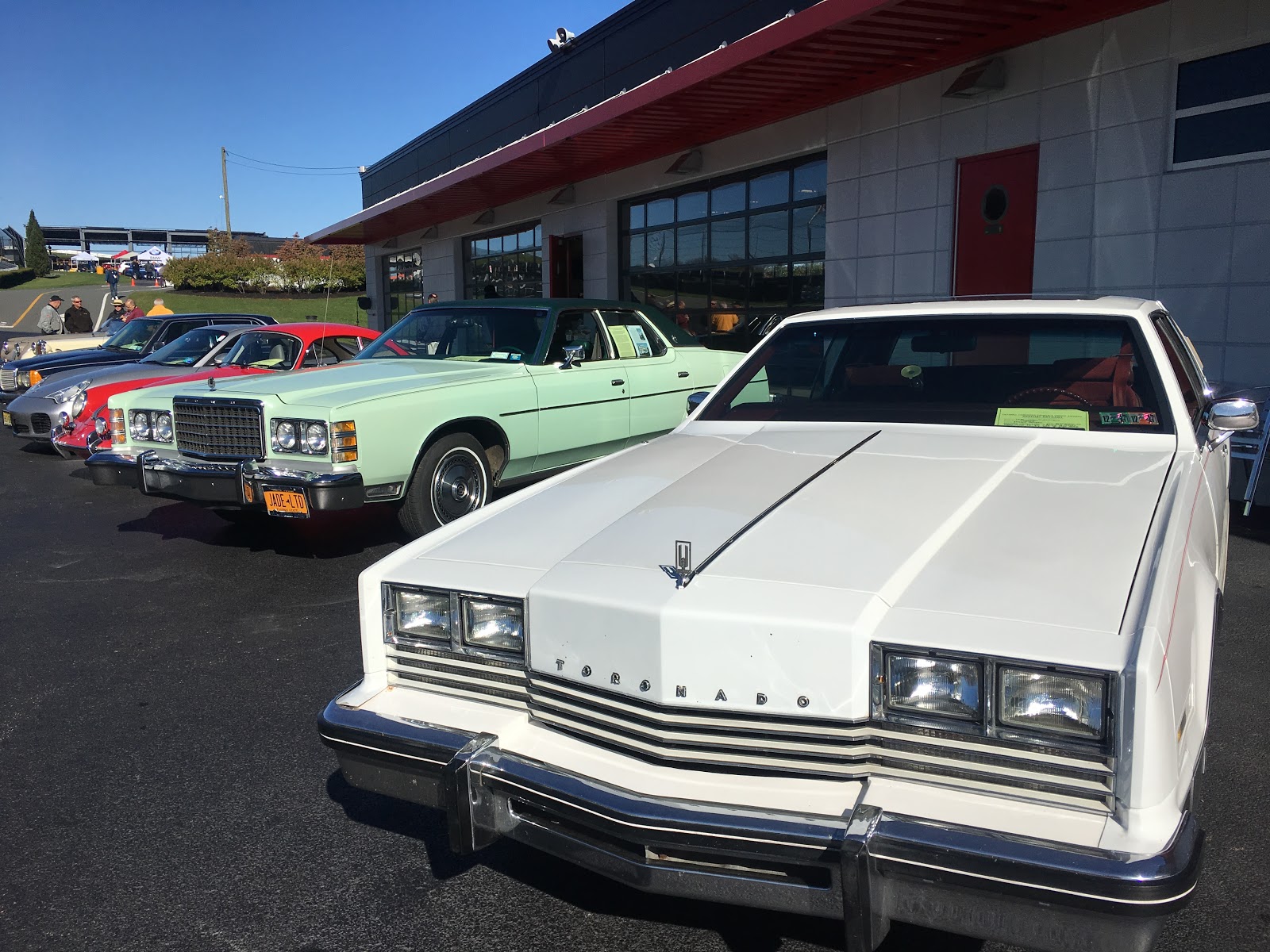
Some IMPA members brought their vintage cars to compete in the Catskill Concours.
A 1954 Jaguar XK120 open two-seater, above and below.


Saturday, March 4, 2017

Tesla fans: Pay no attention to Model 3 doomsday scenario from Business Insider

Matthew DeBord, a writer for Business Insider, was dubbed "The Saab Slob" when he lived in Los Angeles and never washed his car, above.
DeBord also appears to be a fan of motorcycles, but it's unclear what qualifies him to write about Tesla's Model 3, the highly anticipated all-electric sedan that is expected to go into production in July.


-- HACKENSACK, N.J.

By VICTOR E. SASSON
EDITOR

Just the headline sent chills down the spines of Tesla fans:

"The Model 3 could be the worst thing
 that ever happened to Tesla" 

But the story for BusinessInsider.com contained a fatal flaw in the very first paragraph:

"Small cars are in a crisis in the U.S.," said Matthew DeBord, a so-called senior correspondent who covers transportation for Business Insider.

"Increasingly, consumers want big pickups and SUVs.... Into this challenging small-car situation will soon arrive Tesla's $35,000 Model 3 mass-market sedan."

What a blooper. 

Tesla makes premium all-electric cars and although Model 3 will be smaller and more affordable than Model S and Model X, no one in their right mind would lump the zero-emissions vehicle in with gas-engine "small cars." 

It's true that in a period of low gas prices GM, Ford other automakers have been struggling to sell such small cars as the Chevy Cruze and Ford Focus.

But would nearly 400,000 people pay $1,000 each to reserve a Model 3, if they expected the 4-door sedan to be just another "small car"?

Tesla CEO Elon Musk says Model 3 production will begin in July in the same Fremont, Calif., plant where Model S and Model X are assembled.


Tesla CEO Elon Musk introducing the Model 3.


Premium sedan

Model 3, like all Teslas being built now, will be a premium EV equipped with Level 5 autonomous-driving hardware (sensors, cameras and so forth) -- the highest level available.

My 2015 Tesla Model S will drive itself on the highway, park itself and pull out of the garage when I use the "Summon" command on my smartphone's Tesla app.

A nicely equipped Model 3 will cost about $50,000 (base price $35,000), have a range of more than 200 miles on a full charge and is expected to attain the highest safety ratings in every category. 

No "small-car" thinking went into Model 3, which will be a much wiser choice for fans of all-electric cars than the cheap-looking Chevrolet Bolt EV.

Nearly 2 years after I bought my Model S, I still feel like I belong to an exclusive club, and early Model 3 owners should feel the same.

Plus, they'll be buying one of the fastest and quietest sedans on the road, and helping, not hurting, the environment.


Monday, January 30, 2017

Giving green awards to gasoline cars raises no eyebrows in Trump's new Washington

Mercedes-Benz, BMW and Honda are among the major automakers that have dragged their feet on marketing battery-driven, zero-emissions electric cars and SUVs. But that didn't stop Green Car Journal from awarding Green Car of the Year Awards to three of their hybrids, which use plenty of gasoline and contribute to climate change.


By VICTOR E. SASSON
EDITOR

WASHINGTON, D.C. -- Green Car Journal and GreenCar.com have absolutely no connection to the new Trump administration, which is trying to complete oil pipelines and hopes to revive the coal industry.

But this reporter questions why the magazine still is awarding its Green Car Awards to cars and SUVs that use gas, even though that might seem like a contradiction everywhere but in the nation's capital.

In the 10th year of the awards, Publisher and Editor Ron Cogan staged a media event at The Washington Auto Show to announce the latest winners in three categories. 

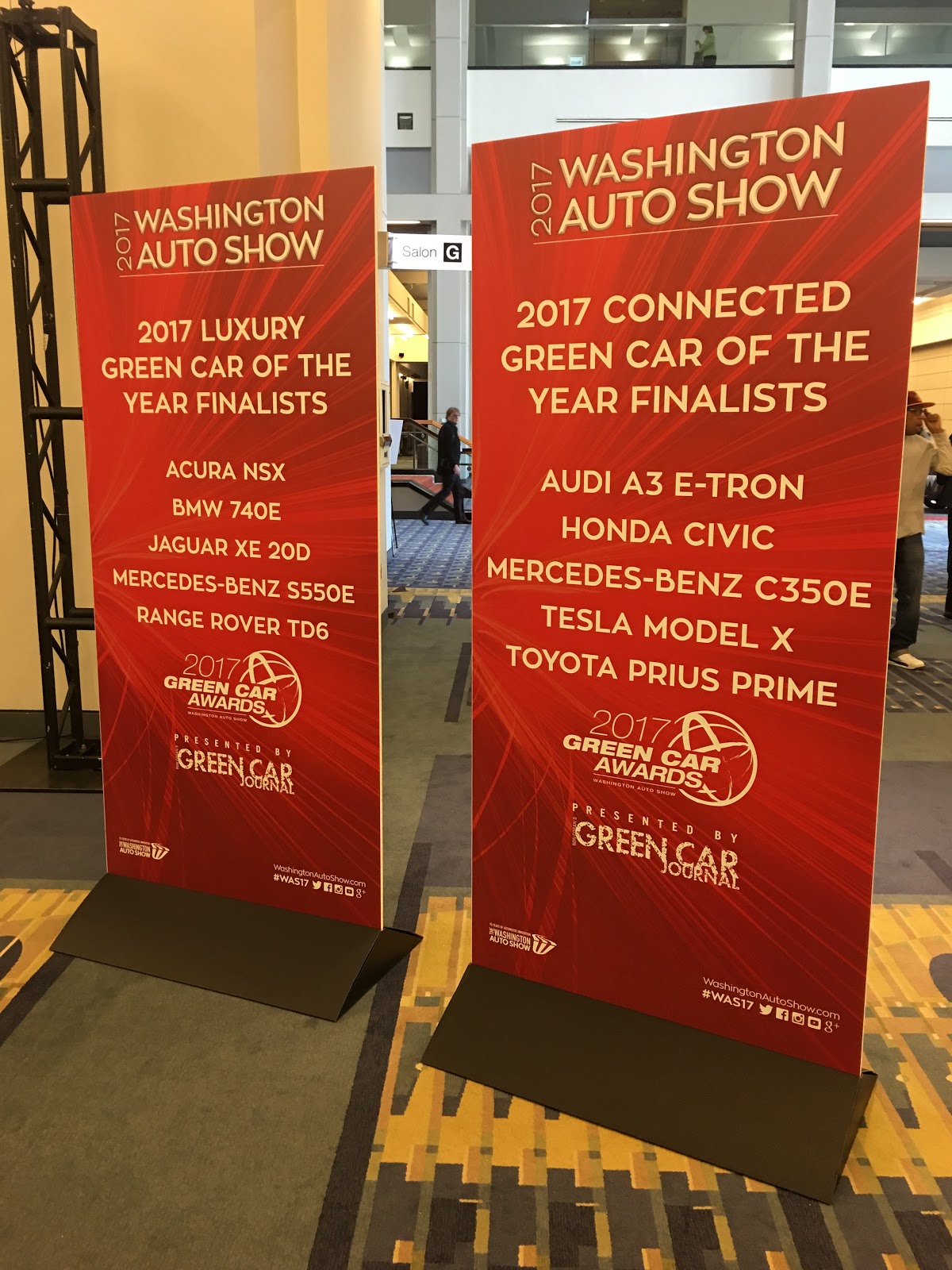
The only all-electric vehicle that made the finals was Tesla's elegant Model X, a 7-passenger SUV with Falcon Wing doors and full self-driving hardware.

Inexplicably, Cogan chose the Mercedes-Benz C350e -- a cramped plug-in hybrid sedan -- over the Tesla as winner of the 2017 Connected Green Car of the Year Award.

The Mercedes claims to get 45 MPGe (gas + electric) in the city, but can travel only 11 miles on its battery and electric motor.

Of course, Model X is a zero-emissions vehicle that uses no gasoline, and can travel 295 miles on a full charge.


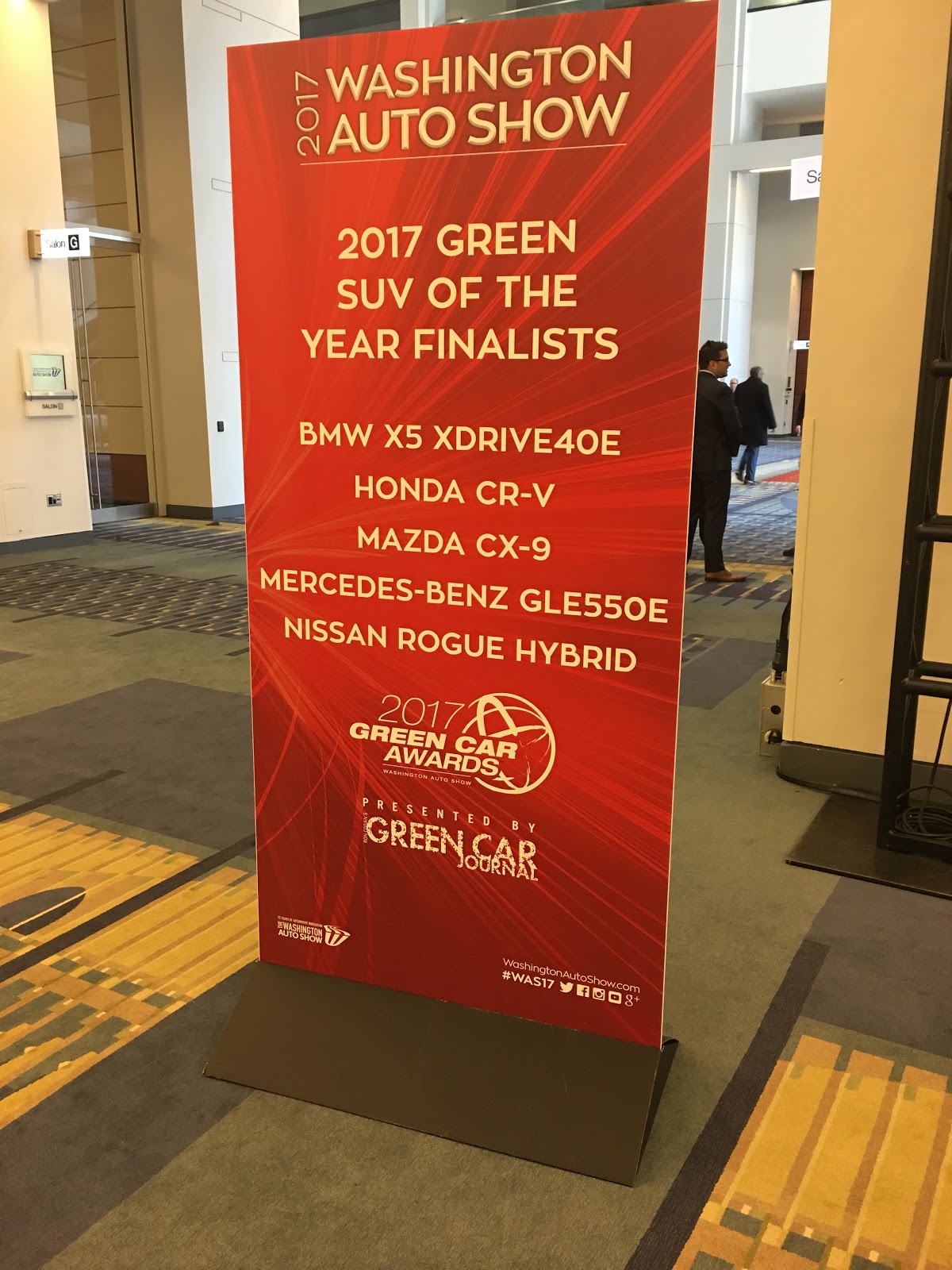
None of the finalists for 2017 Green SUV of the Year are all-electric, and a couple of them aren't even gas-electric hybrids.

BMW and Acura 

Cogan chose the BMW X5 xDrive40e as winner of the Green SUV of the Year Award, and gave the nod for Luxury Green Car of the Year to the Acura NSX hybrid supercar.

Cogan made no mention of the 2017 Chevrolet Bolt EV, which was on display in the Walter E. Washington Convention Center, where the Green Car Awards were announced last Thursday.

He crowned the all-electric Bolt the 2017 Green Car of the Year last November.

For past commentary
 on the auto industry, see: